
This is the first edition of ‘The AI-First Female Founder’.
I am writing this on a Friday morning in Utrecht, after a week that included a pitch coaching session, a Female Founders brunch in Amsterdam, a co-hosted Vibe Coding Night, and a quiet hour at my desk where I watched my computer write the first draft of a LinkedIn post for me. It was not bad. I edited two paragraphs and kept the rest.
If you are someone who is curious about AI but has not yet figured out how it fits into your actual day, you are in the right place. I am building a consultancy Mission Relearn and a product, MindFile, in public. Each week I share what I am learning. No hype, no "10 prompts that will change your life", just what I am actually doing.
On being the founder asking for the seat
I got admitted to FEM-START NEXT LEVEL earlier this month. It is an investment-readiness programme for women founders, four modules in Utrecht and a pitch final on 3 June.
The room was unexpectedly familiar. I have spent the past five years working with Dutch EdTech Foundation and ROM Utrecht Region, which means most of the people running this programme are people I have known from the other side of the table. Now I am the founder asking for the seat.
It is a different angle, and it is teaching me something I had not fully internalised: the funding conversation for a female founder is structurally different. I needed to be in a room where that was the default assumption, not a footnote.
The practical output is real. The pitch deck for MindFile went from version 1 to version 10 in two days. The financials got actual numbers. I now have a shortlist of investors I plan to talk to in Q3. On Wednesday I pitch in the finals at Dotslash Utrecht, and on Thursday I will probably need a long walk (haha).
My week with an AI team
I am one person (for now), but I do not actually work alone anymore.
A small group of AI helpers runs in the background of my workday. One drafts LinkedIn posts in my voice. One reads through long documents and writes plain-language summaries. One sketches out the steps for big projects so I can react to a draft instead of starting from a blank page.
None of them publish anything. They leave drafts in folders I check each morning. I am still the one who decides what goes out. What changed is that I start from "here is something to react to" instead of "here is a blank document".
For a knowledge worker getting started with AI, this is the move that compounds. Not learning the perfect prompt. Not subscribing to the latest tool. Picking the two or three tasks each week that drain you, and asking an AI to draft the boring 80 percent so you spend your energy on the 20 percent that actually matters.
If you want a starting place: pick one repeating thing this week (a status update, a meeting note, an outreach email) and let ChatGPT or Claude write the first draft. Edit it. Notice what you kept and what you changed. That is your voice surfacing. Do it three times and you have started building your own personal AI workflow. Ask your LLM to ‘memorize it’ and you’ll keep adding to that voice.
What happened this week
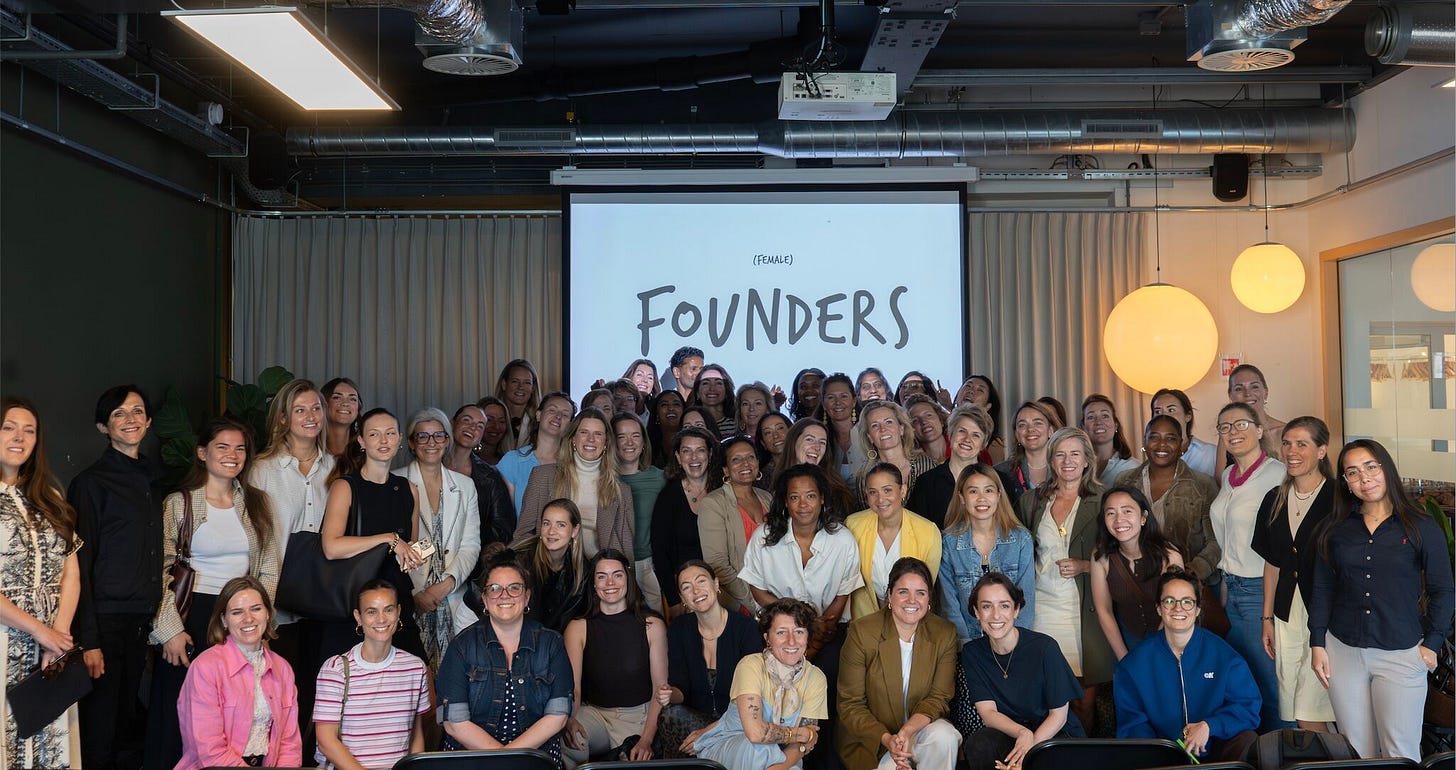
Capital C Female Founders Brunch in Amsterdam on Thursday. Three hours of women founders comparing notes. The atmosphere was different from any tech event I have been to.
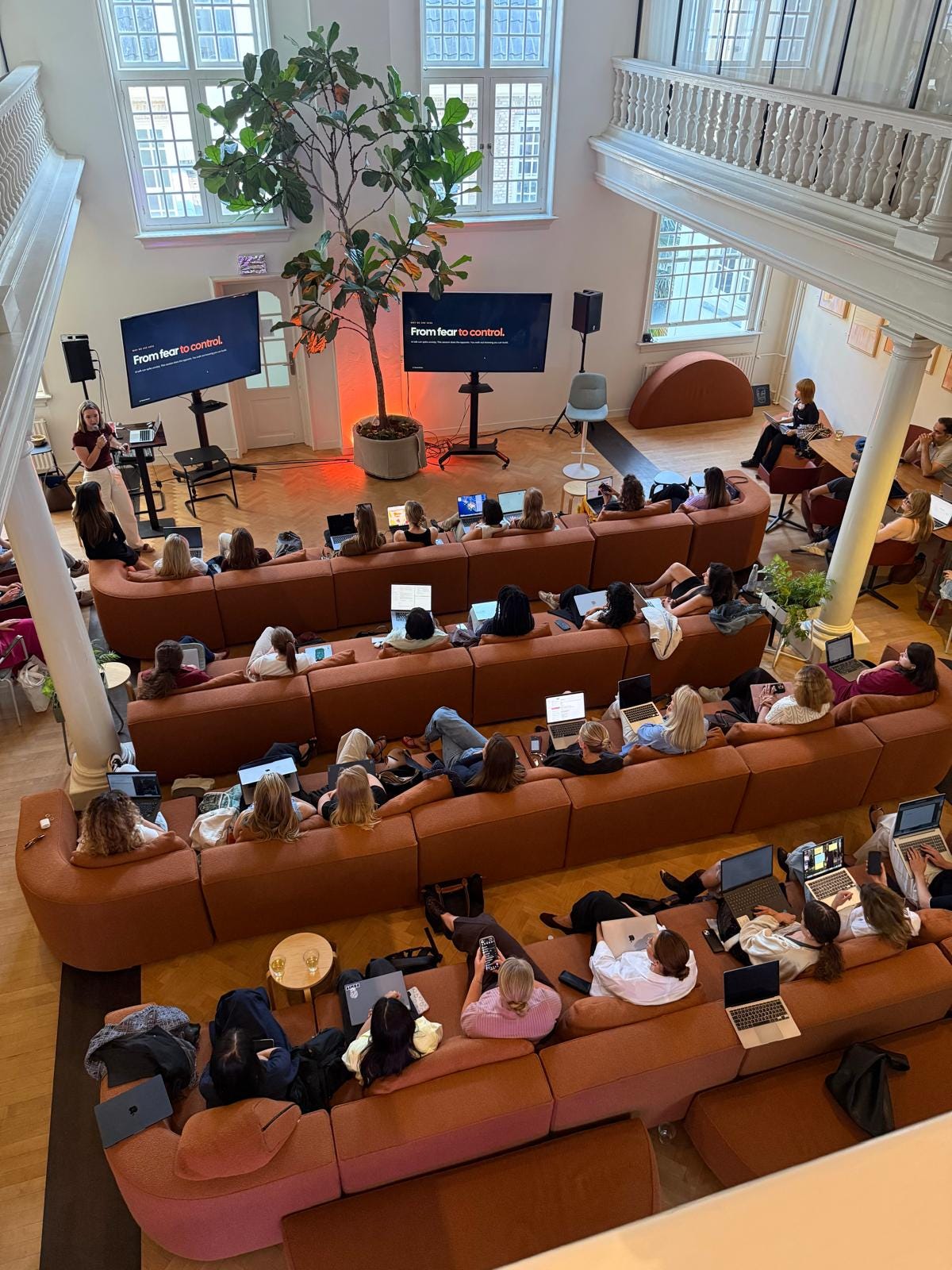
MOXIE Vibe Coding Night in Amsterdam on Thursday evening, co-hosted with Ellie de Wit and Elselyn Tan. Beginners, builders, and the question "what would you make if there were no excuses".
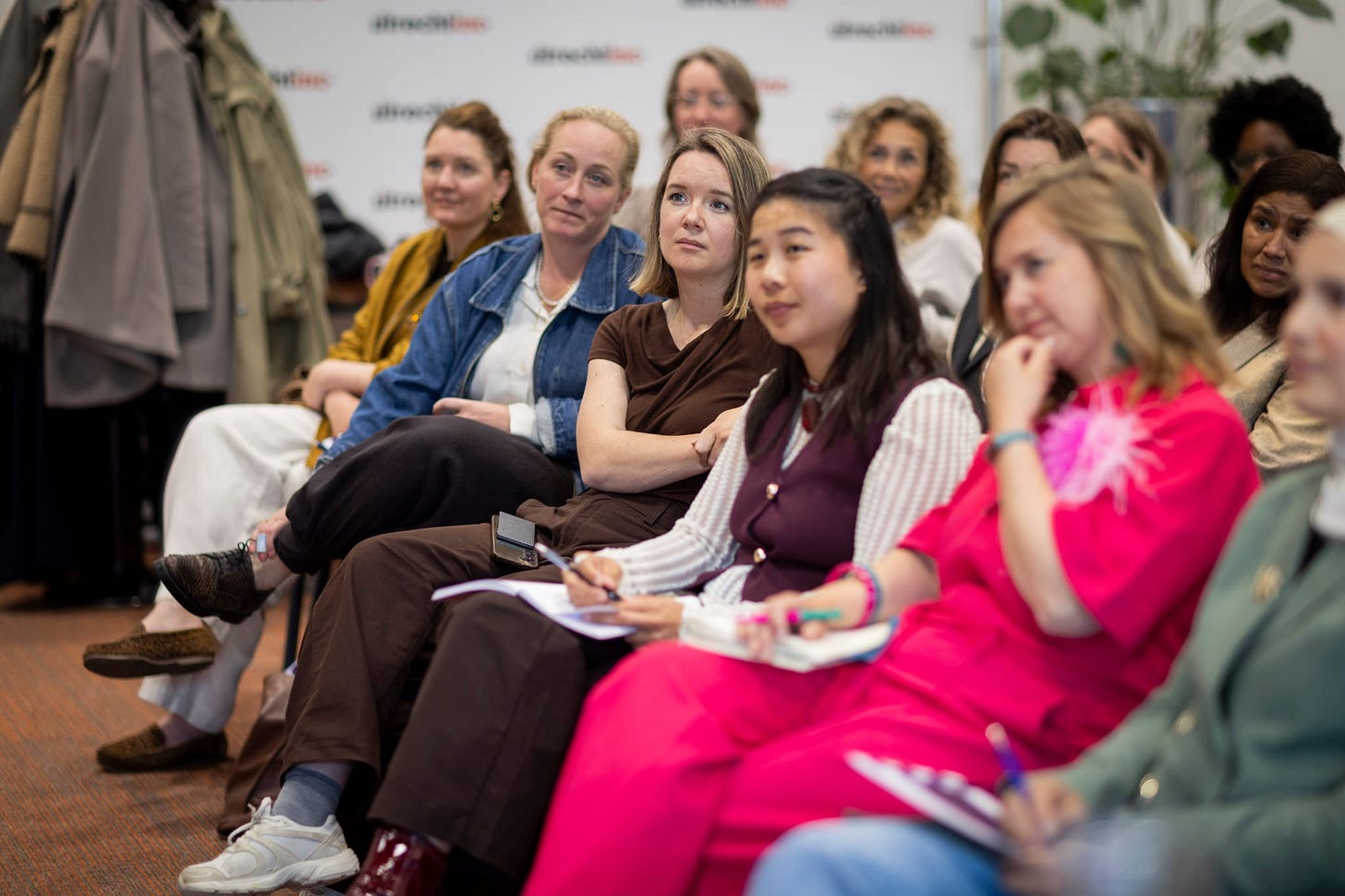
FEM-START Module 3: Pitching. Took my pitch from "informative" to "this person knows where she is going". Slight terror improved the result.
What I read this week
The One-Person Unicorn by Linas Beliūnas: the post. The thesis that a single founder with the right AI stack can run what used to need a 50-person team. Whether you buy the full claim or not, it reframes what you should be doing with your weekends.
I am just a text file by Ruben Hassid: the post. What it feels like to write yourself into your AI tools. Beautiful and slightly unsettling, in a useful way.
The EU is going through a Trump-fuelled breakup with Big Tech in Wired: the article. Why EU sovereignty around tech is suddenly back on the table. If you work in or with European organisations, this is the context for every AI procurement conversation in the next 12 months.
Julius Brussee on open-sourcing a 200-line skill on LinkedIn: the post. What happens when you take something small and useful, put it on the internet, and wait. A good lesson in why small things matter.
browse.sh: browse.sh. A small tool I am test-driving that lets AI agents browse the web on your behalf.
Thanks for being here for the first edition. If you have a friend who is "curious about AI but not sure where to start", forwarding this is the warmest thing you can do.
If you want to talk, my DMs on LinkedIn are open. Reply to this email and I read every one.
Until next week,
Annet