
On Thursday I stood in front of a room in Utrecht and taught people to build the Personal AI system I use to run Mission Relearn and MindFile. Their own version, on their own laptops, before the afternoon was over.
I’ve noticed most people think building a Personal AI system means writing code or picking the right tool, but it actually starts with your voice and your workflows. And even better: with Wispr Flow.
So we began there. Together with an easy-to-install package (bash command) everyone recorded a few voice notes about how they actually work: how they write, what they decide, the things they keep repeating to colleagues. We fed that to an LLM and asked it to ‘memorize it’. Twenty minutes in, each person had an assistant who wrote in their words instead of generic AI mush.
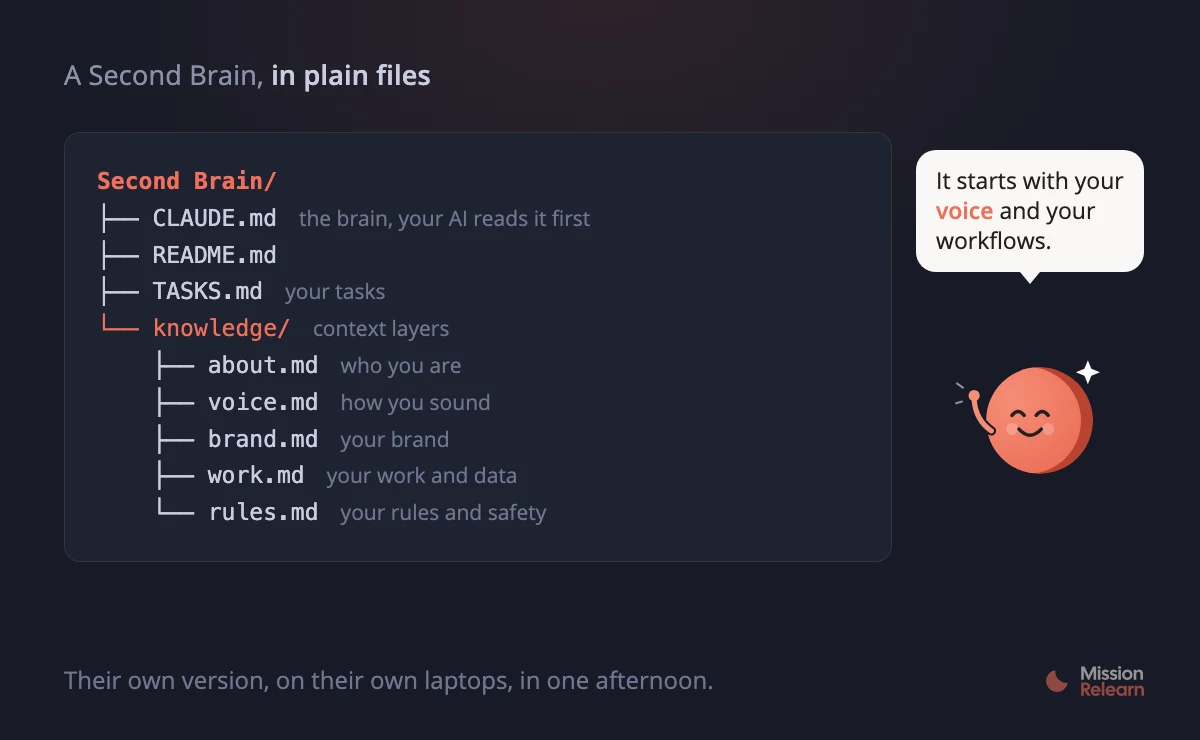
Then we layered on top: a place to keep context, a place for repeatable tasks, a habit of adding to the memory every time you use it. By the end, the room had the skeleton of a ‘Second Brain’, the same structure that runs my business in the background.
AI at work this week
Two names show up a lot in here, so quickly: Mission Relearn is my AI-literacy consultancy. MindFile is the product I am building alongside it, a Personal AI system that holds your documents, voice notes, and real work, then loads into any model so it knows you instead of starting cold. The LLM is the laptop, MindFile is the USB-stick. It is made for people who do not write code.
And, while I was in that room, the agents kept working. Three jobs ran without me touching them.
A multi-agent workflow screened a list of 41 possible investors for MindFile: who they are, whether they fit, and who is worth a cold email. It pre-scored everyone in plain Python first, then sent one research agent per name.
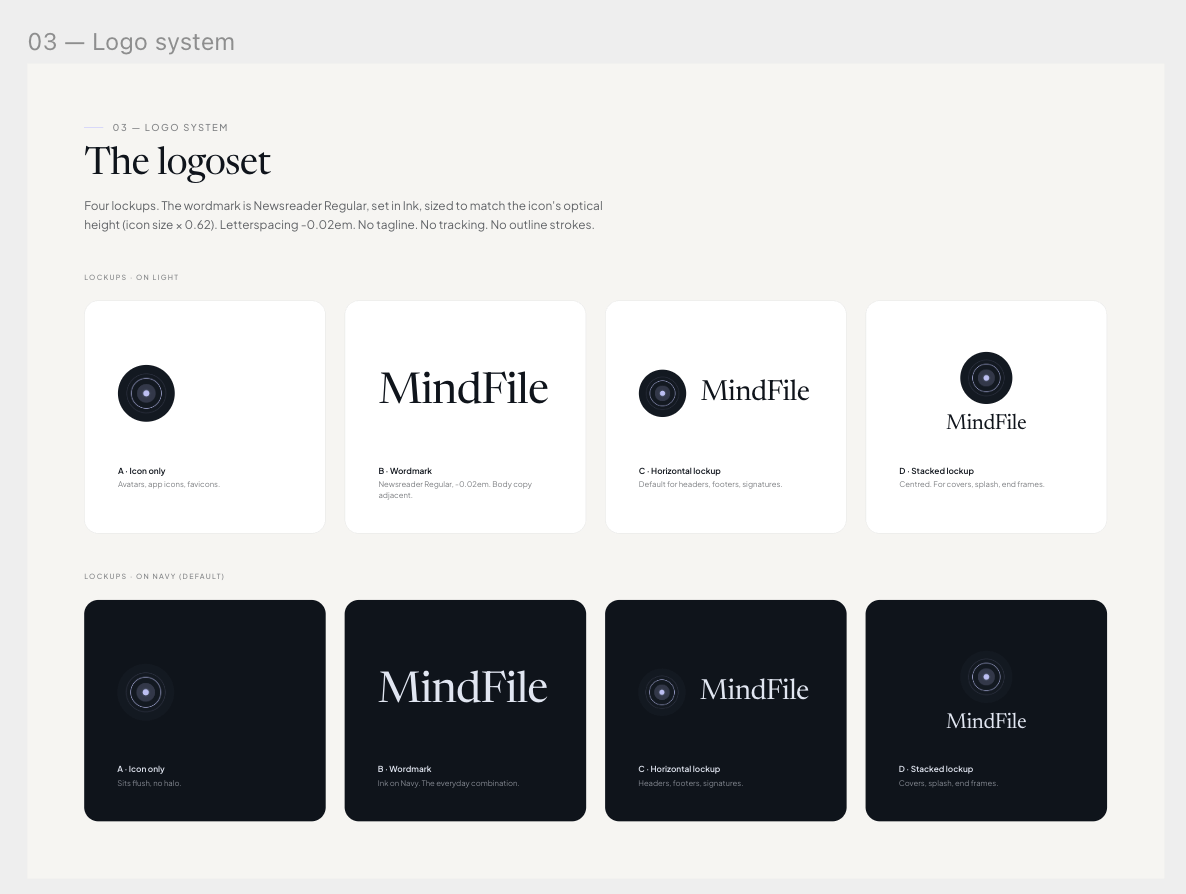
A second job turned a single icon into a full logo set. I handed it one PNG. It built the missing lockups as HTML, rendered them at three sizes, and dropped 21 production-ready files into my brand folder.
I also spent an evening trying to host a local model on my Mac Mini and gave up: the machine is too memory-saturated (with cron jobs) to keep one coherent alongside the agents it already runs (working on it).
Lessons from client work
Different project, same week. We were getting the new Mission Relearn Academy ready for testers, and on paper, it looked finished. I clicked through every page logged in as myself. Everything worked.
Then I opened it as a normal visitor, not as staff. Half of it was unreachable. The broken button was never the problem. The front door was: signing up, getting access, landing in the right place.
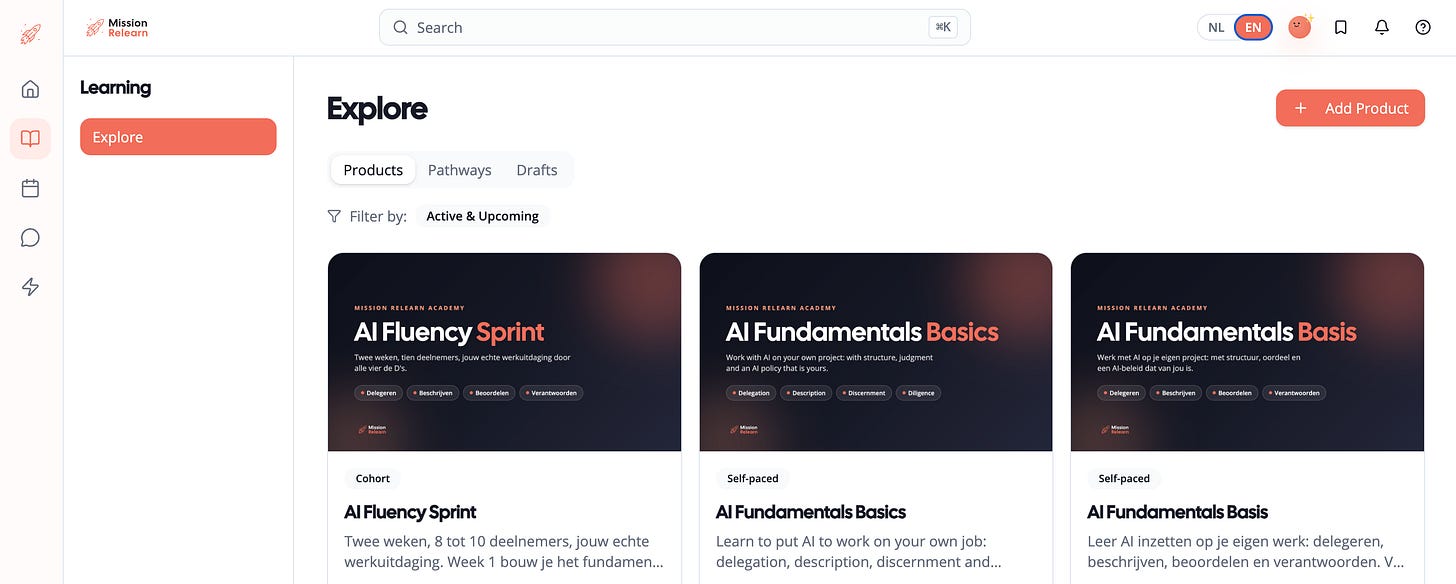
The lesson I keep relearning: previews lie. When you build the thing, you are always logged in as the most privileged user, so you never hit the wall that your real users meet first. Now I test every release as the least-privileged user in the system.
What I read this week
The Quiet Reinvention of Assessment, Dr Philippa Hardman. How AI is quietly rewriting what it means to assess learning, from the person I trust most on instructional design.
The AI Product Operating Model, Aakash Gupta. How product teams reshape themselves around AI, useful even if your team is one person.
The Mom-and-Pop SaaS era has arrived, Elena Verna. The case for small, owner-run software businesses, which is the future I am building toward.
The Slow AI roundup, Dr Lauren at ai girl gang. A calmer, more critical read on AI from a woman who refuses the hype cycle.
Is AI Profitable Yet?, a live tracker of spend versus profit per AI company. The top four on that gap are wild.
Goodbye prompt engineering, hello loop engineering, Iwo Szapar. His playbook for working with AI in loops instead of chasing the perfect single prompt.
LibreChat, an open-source, self-hosted chat platform that puts every major AI model behind one private interface.
Why you should define your fears instead of your goals, a TED talk on fear-setting. Instead of fixating on goals, map out what you are actually afraid of. A good reset before you do something scary.
GLM-5.2, Z.ai's new open-weight models on Hugging Face, for when you want to track where open models are heading.
PM skills for Claude, a collection of product-management skills for Claude, from competitive analysis to go-to-market planning.
The Claude Fable 5 system prompt leak, a breakdown of an unverified leaked system prompt with nine lessons on how these models are actually instructed. Over half the budget is capability, not personality.
HyperFrames, an open-source framework that turns HTML, CSS and animations into deterministic MP4 videos, built for AI agents that write video as code.
What are you building your own AI system on top of yet, your voice, your notes, your inbox? Hit reply and tell me where you are stuck.