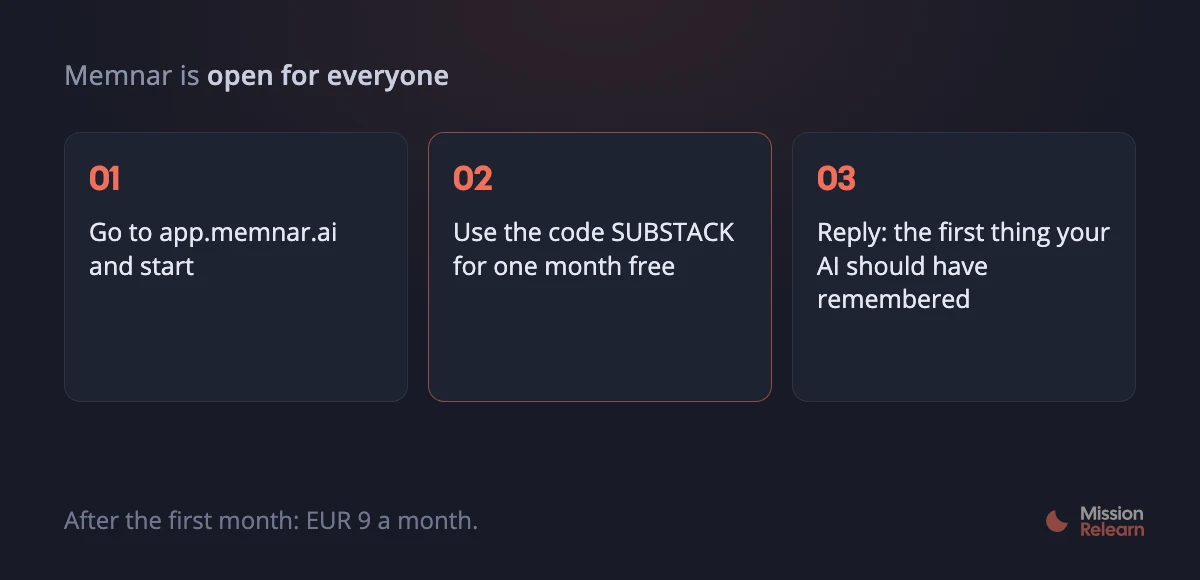
This week I stopped hiding Memnar behind a waitlist(!!). Signups are open to anyone now: you go to app.memnar.ai, and you start. I have wanted to write that sentence for months, and now that it's true, I mostly want to lie down (haha).
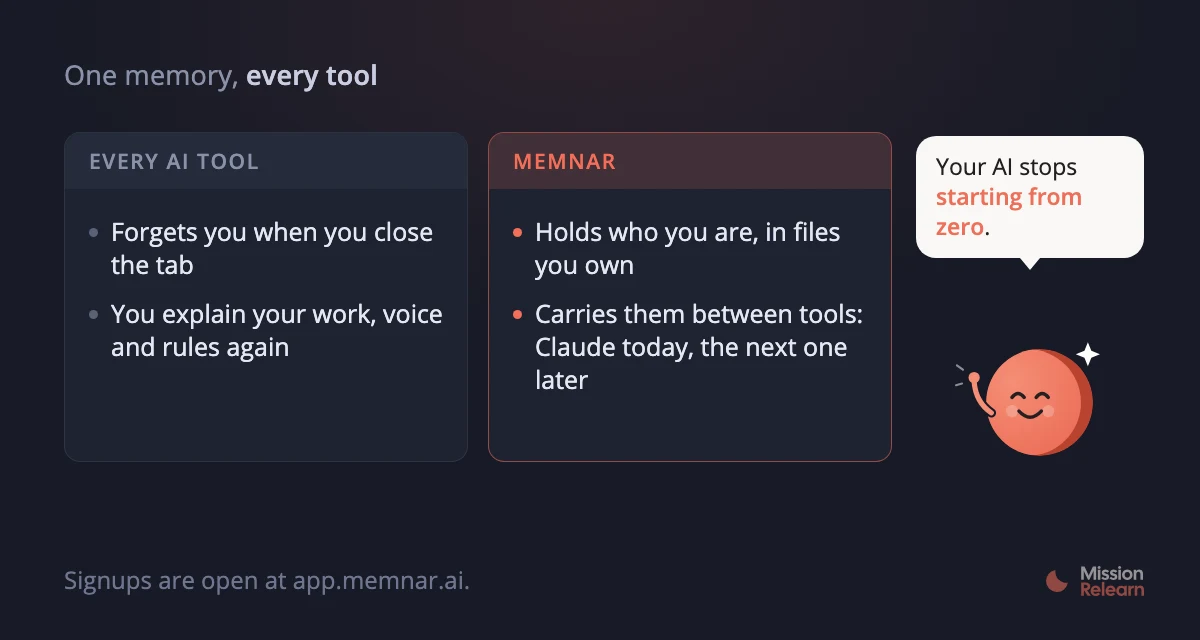
So here is what it actually is. Every AI tool you use forgets you the second you close the tab. You re-explain your work, your voice, your rules, over and over, to a thing with the memory of a goldfish. Memnar is a memory layer you own that fixes that. It holds who you are in files that belong to you and carries them between tools: Claude today, whatever you switch to next year. Your AI stops starting from zero.
It's EUR 9 a month. For readers here, the code SUBSTACK gives you the first month free. If you try it and something breaks, hit reply. It lands on my desk, not a ticket queue (at least while users are still low..).
I had two AI models read the whole app before I let you in
Before I opened the doors, I asked two models to go through the Memnar app the way a senior developer would. I’ve found that Fable is the absolute best at orchestrating plans mapped the whole repository like a Senior Developer would. Opus executed on the plan behind it, and went deep on the code that touches money and types.
For the technical people reading this: Some of it was reassuring. CI runs on every change, GitLeaks blocks secrets before they can push, and 18 test files already cover the business logic. Then came the two findings that made me quietly grateful I asked.
One: nothing in the app was type-checked. A type error had been sitting in the main branch for who knows how long, invisible, because the build step skipped the checker entirely. Two: the payments code that went live last week had no guard against processing the same event twice, and zero tests on it.
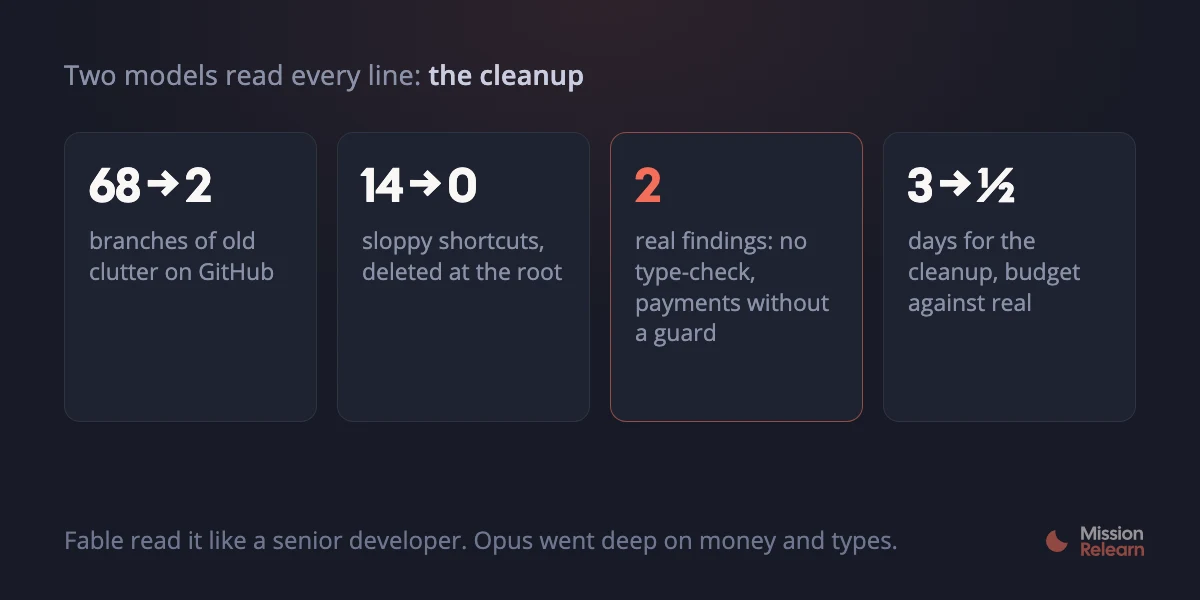
I fixed both on the same day. Along the way, the type-checker got switched on for good, 14 sloppy shortcuts got deleted at the root, and my GitHub went from 68 branches of old clutter down to 2. The cleanup I had budgeted three days for took about half a day, because, in all honesty, I just had to press enter all weekend in between diapers, a sunny bike trip with the family and hosting a family dinner.
Doing this by hand, this would have been absolutely impossible. So glad access to Fable 5 has been extended.
Why I keep building scaffolding
There is a debate going around right now, sharpened by a post from Claire Vo: the thing that makes AI actually useful is the harness, the scaffolding you build around the model, more than the raw model itself.
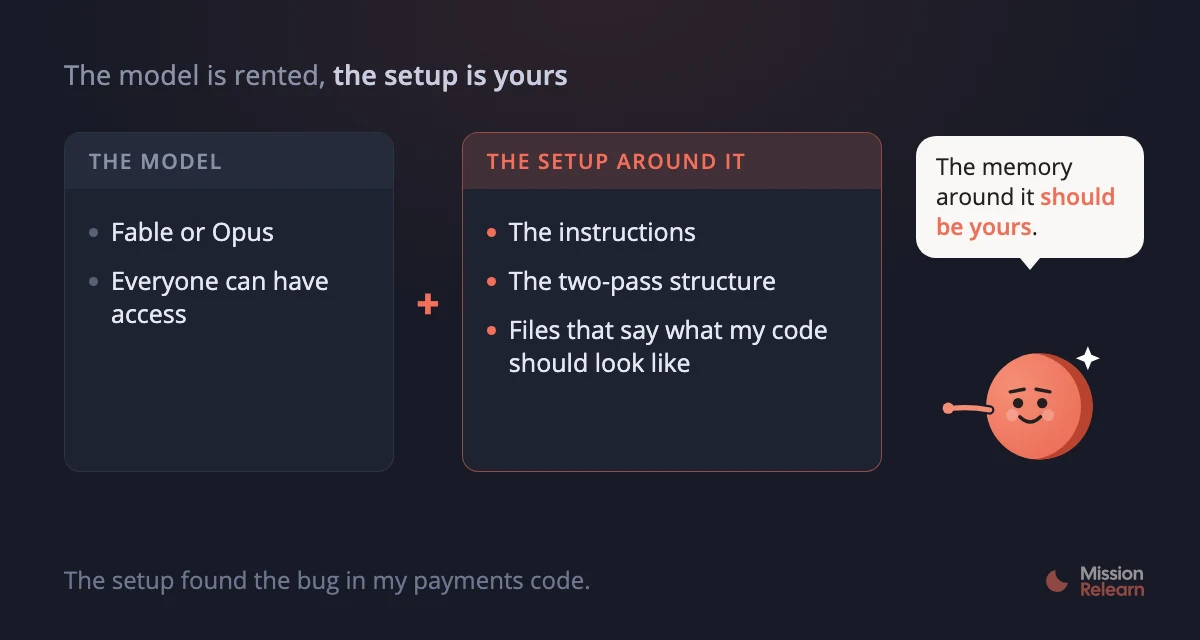
This is the absolute evidence that Memnar is something people need. Everyone can have access to Fable and Opus. What made them find a real bug in my payments code was the setup around them: the instructions, the two-pass structure, the files that tell them what my code is supposed to look like. Memnar is me betting on that idea in public. The model is a monthly payment; the memory around it should be yours.
What I read this week
A simple threshold captures the social learning of conventions (PNAS): new research shows that conventions spread by a simple rule, and people adopt them once enough others around them have. I keep mapping it onto how AI adoption tips inside organisations, once enough colleagues quietly rely on it.
ai-job-search (GitHub): a Claude Code framework that runs a whole job hunt, evaluating postings, tailoring your CV, and writing cover letters. Another harness is doing real work, which is the whole thread above.
Where technical skill is heading (Dorsa Rohani, X): a sharp note from an AI engineer on what changes when the model does more of the typing.
TRMNL 7.5 DIY kit (Antratek): a build-it-yourself e-ink dashboard, ESP32 plus a 7.5-inch screen. I want one on my desk showing my Memnar signups and my agents' overnight runs, so the numbers stare back at me every morning.
Memnar has been invite-only for months. This week it isn't. If you have ever had to re-explain yourself to a chatbot for the tenth time, that's the itch it scratches.
Try it with the discount code SUBSTACK for one month free of charge, then hit reply and tell me the first thing your AI should have remembered about you.