
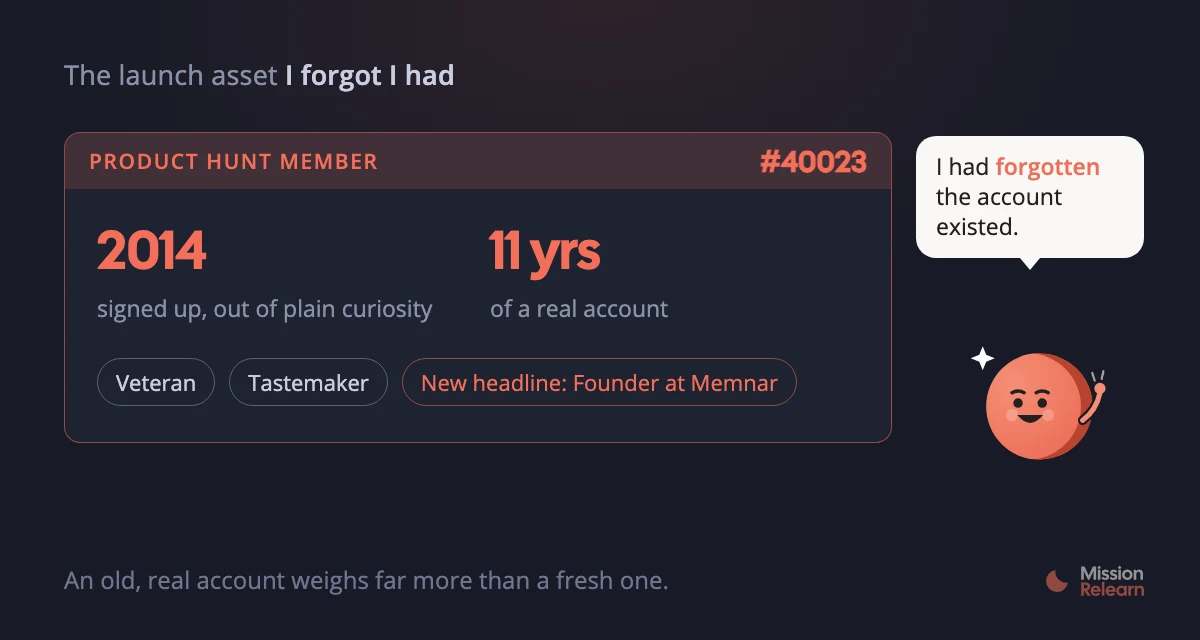
This week my AI system started researching a Product Hunt launch, and the first thing it found was me. My own profile, member number 40023, created somewhere around 2014. I had forgotten the account existed (haha).
For anyone new here: I run a one-woman AI consultancy, Mission Relearn, and I build a product, Memnar, in public. This week's edition is the launch prep itself.
Getting ready for Product Hunt
Memnar launches on Product Hunt on Monday 17 August. Before writing a word of listing copy, I let my AI system, the fleet of agents I run, dig into how Product Hunt actually works in 2026, because most advice online is two years stale. It came back with 35 fact-checks across seven tracks.
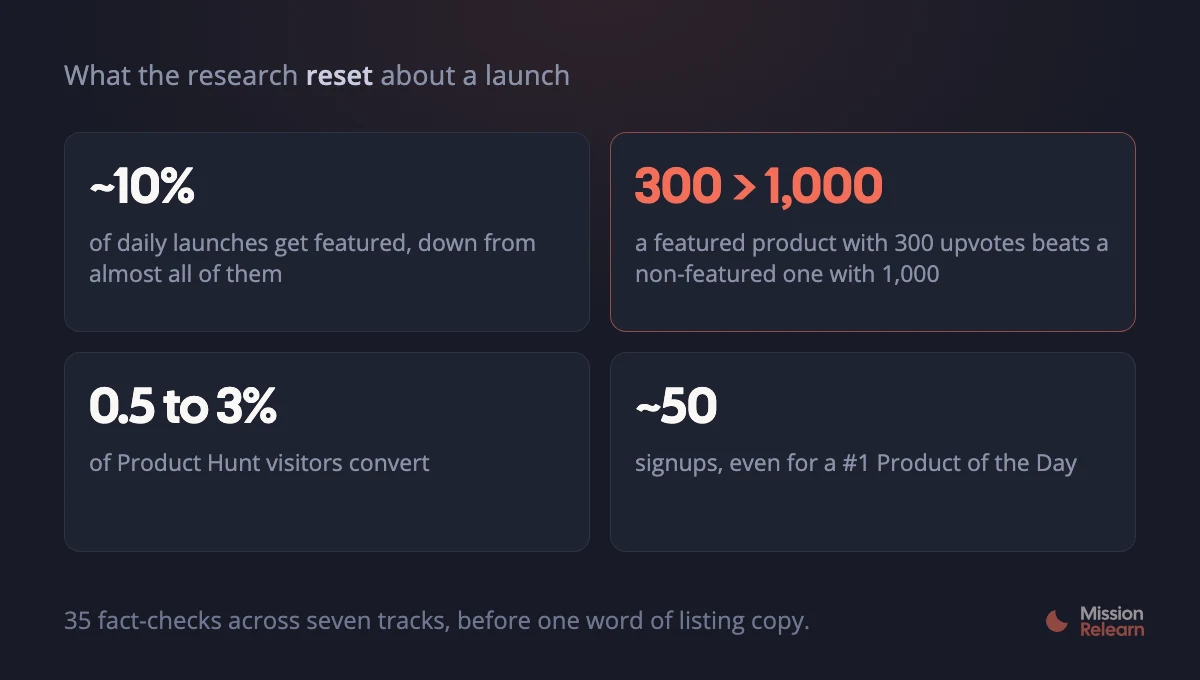
A few of them reset my expectations. Featuring is a manual editorial call now, and only about 10% of daily launches get featured at all, down from almost all of them a few years ago. A featured product with 300 upvotes beats a non-featured one with 1,000 on every traffic number. And even a #1 Product of the Day can mean roughly 50 signups, because Product Hunt converts somewhere between 0.5% and 3% of its visitors, so the rank looks bigger than the traffic behind it.
Then the account. That 11-year-old profile carries Veteran and Tastemaker badges, from back when I signed up out of plain curiosity. On Product Hunt, an old, real account weighs far more than a fresh one, so I get to hunt my own product instead of borrowing someone else's reach. Mostly I want to thank my 2015 self for being nosy. The old account gets a new headline this month, Founder at Memnar, and a handful of genuine upvotes and comments from me over the coming weeks.
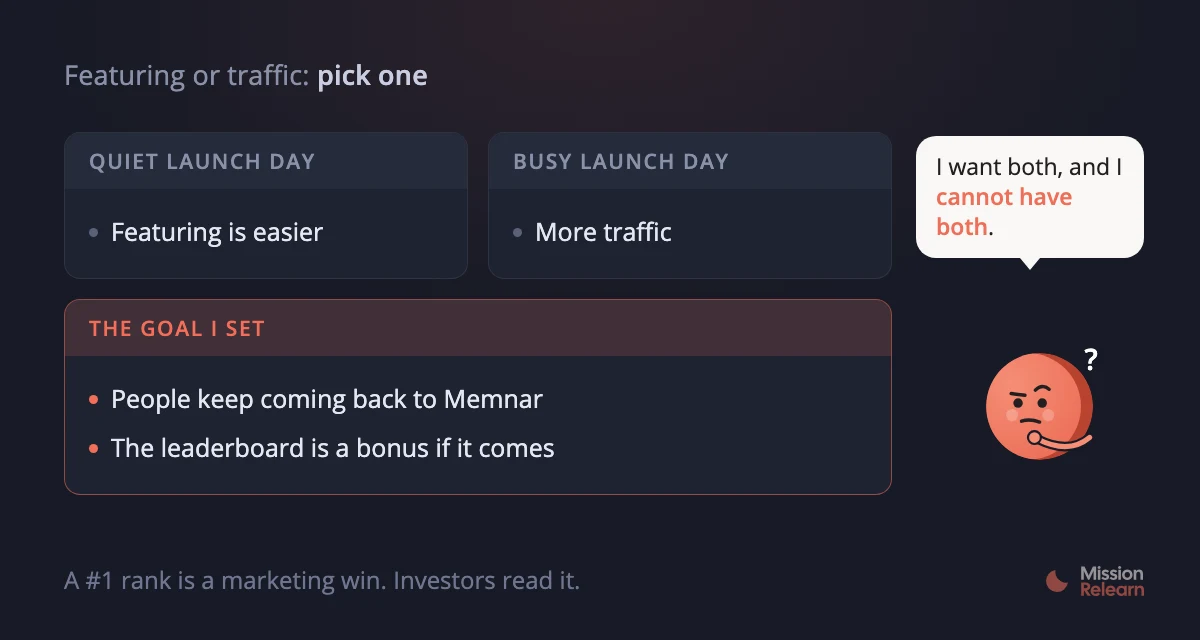
A quiet launch day makes featuring easier, a busy day brings more traffic, and I want both, and I cannot have both at once. A #1 ranking is a nice marketing win, and investors read it. I care more about whether people keep coming back to Memnar. So that is the goal I set, and the leaderboard is a bonus if it comes.
Not all of it is ready. The launch video still carries the old logo in its embedded screenshots, and the square Reddit cut has too much dead space, so the storyboard goes back on the table this week. Three weeks out, that is a fine place to be sitting (for now).
Tool of the week: PostHog
What: PostHog on EU Cloud, the web and product analytics that tell me where my launch traffic comes from and where it leaks.
What I used it for: the acquisition side of the launch. It sits next to my own Supabase data, so PostHog tells me where a visitor came from and Supabase tells me what they did once they were in.
Verdict: keep, and the EU Cloud option is a big part of why. One caveat worth saying out loud: a few of the default settings share data with third-party AI services out of the box, so go through the privacy toggles by hand before you trust it.
AI at work this week
I wired up the launch measurement before the launch. Every morning a detector reads the live app, finds which users are stuck and exactly where (signed up but never built their first memory, connected but never pulled anything back), and puts one question in my daily email. The question is always practical: how to help this person, right now. One tap and it becomes a task in my agents' queue.
The same loop watches the traffic side through PostHog. A spike from a new source, or a page that pulls visitors but no signups, becomes its own line in the morning mail with a suggested next move.
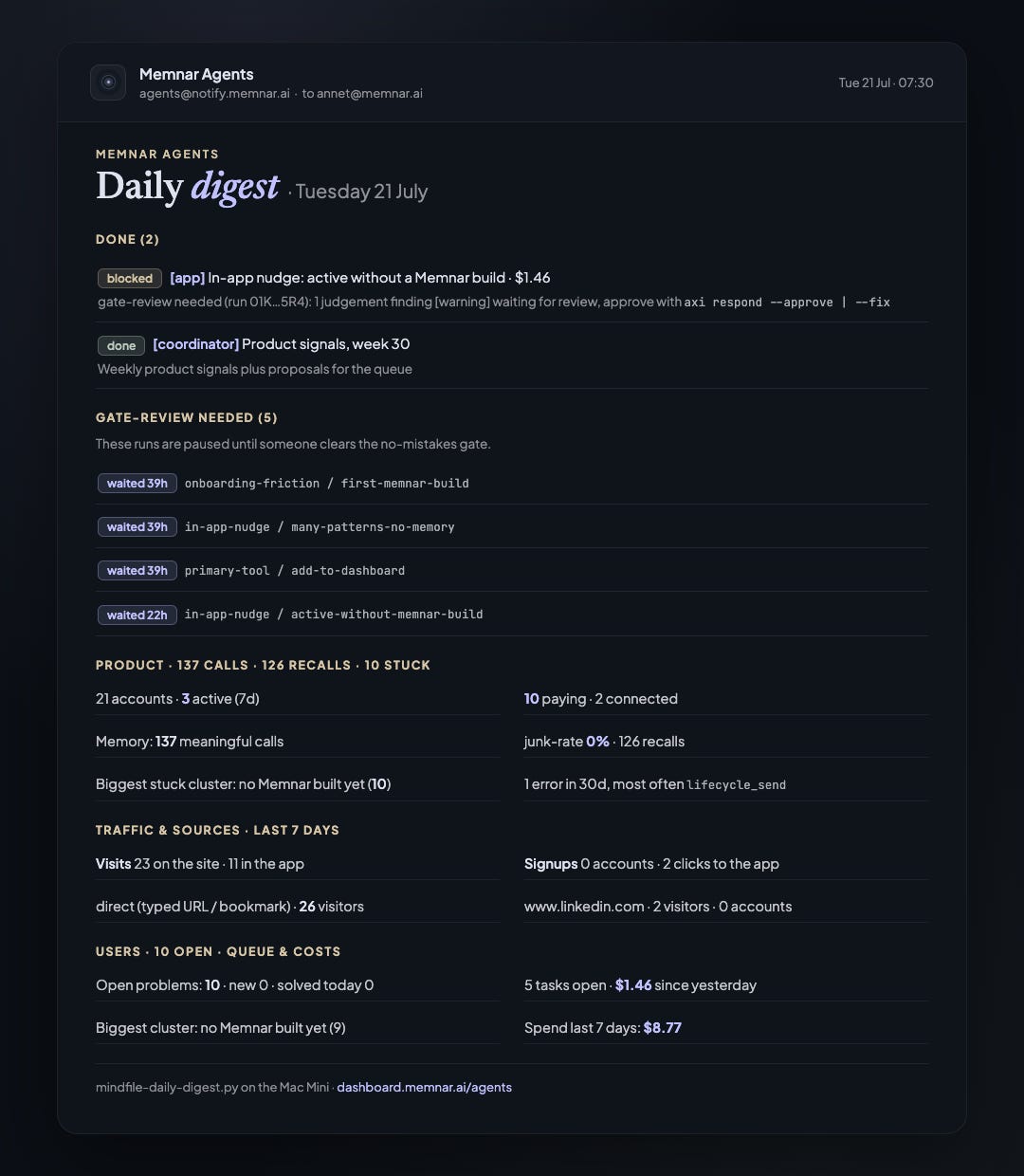
This week it flagged 9 stuck users, each with a specific next action, and counted 52 meaningful tool calls after filtering out roughly 380 handshake-noise calls that were drowning the raw log.
The reason I built it this way: I cannot sit and watch a dashboard all day during a launch week. So it lands in my inbox every morning whether I ask for it or not, and the stuck users come to me instead of hiding in a chart I forget to open.
What I read this week
Karpathy’s llm-council: a tiny weekend build where several models answer your question, rank each other’s replies, and a chairman merges the best into one. A clean demonstration of why more than one model beats one.
loop-engineering: a toolkit for getting Claude Code agents to coordinate without polling or extra infrastructure, one orchestrator handing out tasks through git folders while the workers report back. The plumbing behind running a fleet.
ai-job-search: a Claude Code framework that reads job postings, tailors your CV, drafts the cover letter, and has a second agent review the draft before you send it. If you are job hunting, point Claude at it.
The former Intel CEO, and Lovable’s CEO on vibe coding: an honest read on where building software with AI helps and where it still does not.
If you have launched or have an account on Product Hunt, I have a question: how many signups did your rank actually bring you or how active are you there currently? Hit reply. I am collecting real insights before 17 August.