Somewhere in the second half of week two, on a holiday in Czechia, I got bored and opened my work mail. That five-minute online moment is the most useful thing I have to report from my Summer break.
New here? I run a one-woman AI consultancy, Mission Relearn, and I build Memnar, a portable AI memory, in public.
Three weeks without a laptop
Before we left, I did three things. I turned off my email notifications. I made my phone boring with an open-source home screen launcher: no work apps in sight and no access to my AI setup from it. And I asked Claude (Fable) to go through my agent fleet, the set of agents that runs on the Mac Mini at home, and make sure nothing could break while nobody was watching.
Then I closed the laptop for three weeks.
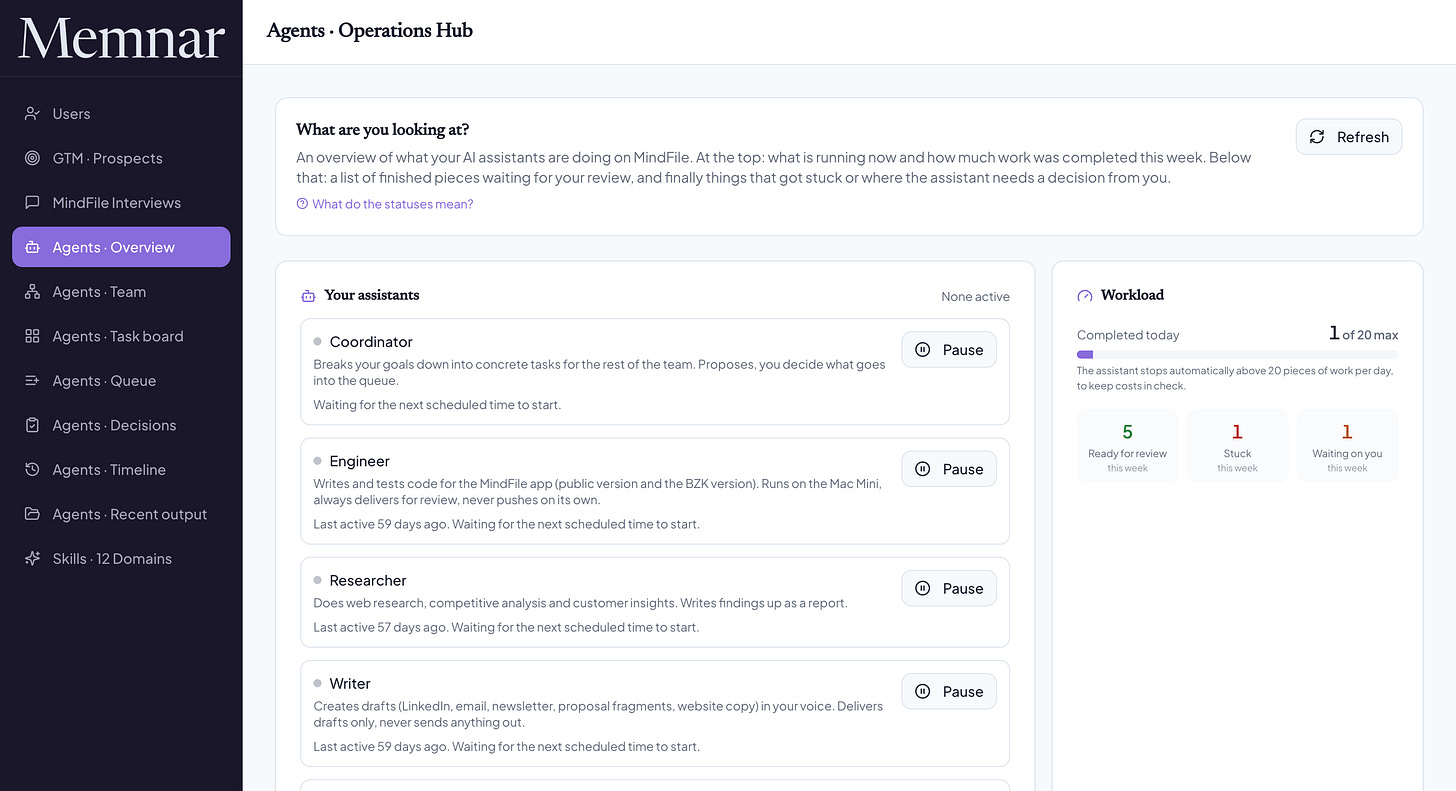
The fleet kept working: 19 runs across 5 agents while I was away, and their digest mails kept landing in my inbox. Memnar stayed live. Nobody needed me.
Until that campsite moment. A quiet moment, boredom won, I opened my work mail, and the digests were waiting. I approved 10 review tasks in one sitting, straight from my phone. Then I hit the edge I had built on purpose: approving was all I could do. Giving the agents new plans requires my laptop, and the laptop was 2000 kilometres away. When I saw that some of the work was standing still, I closed my mail again and went back to my family. But of course a seed was planted.
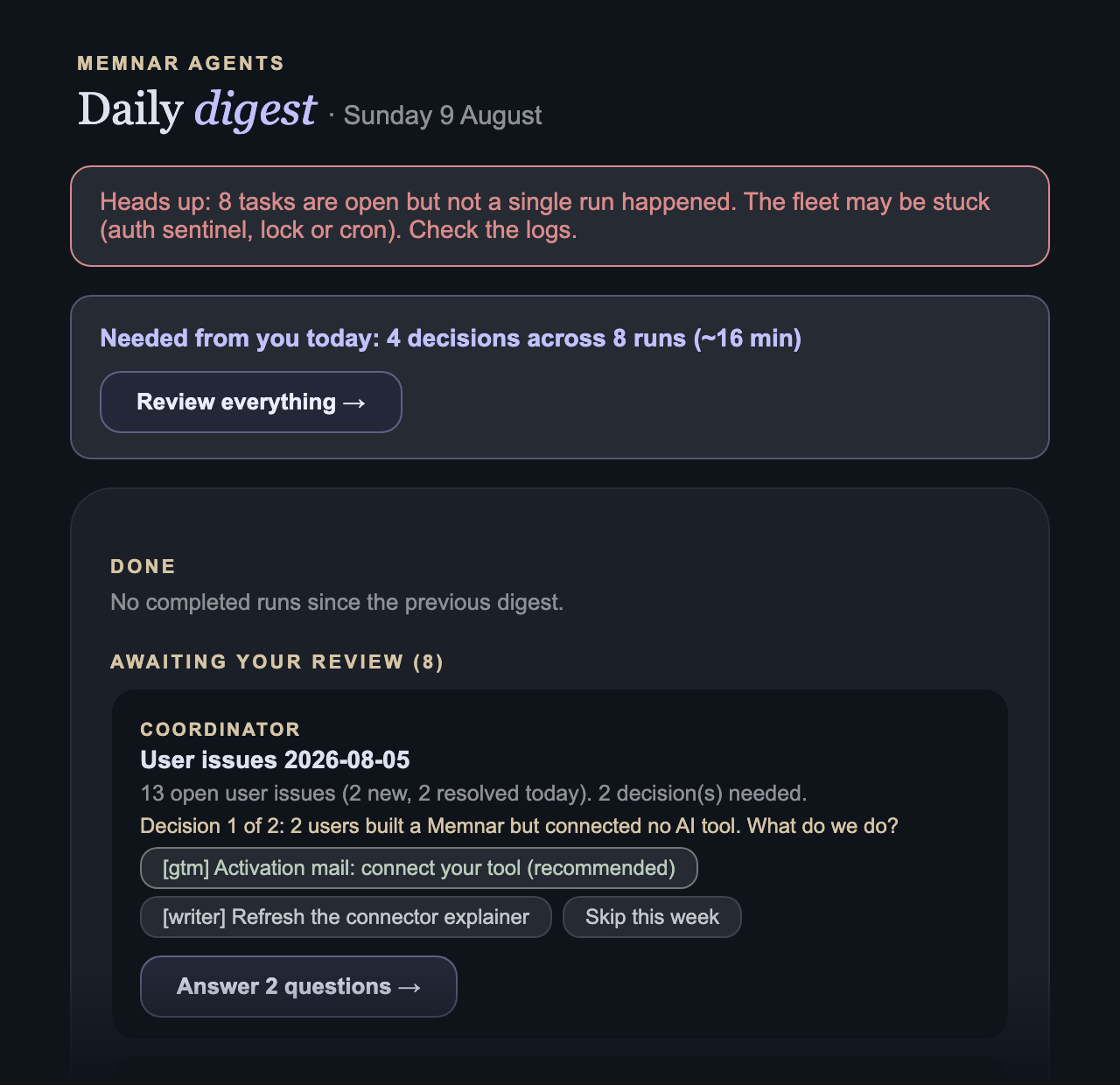
A reconstruction: the last agent run happened on August 11, two days before I came home: the queue was empty because nobody was feeding the agents new plans. That part is on purpose.
I see that as good design. In this early phase, the product should grow from the founder's insight, so I find it healthy that the agents wait for me. It does leave one fair question: can I afford to go quiet? The fix is overlap: a co-founder or a team whose time covers mine (working on it).
The one exception: 37 degrees in Český ráj
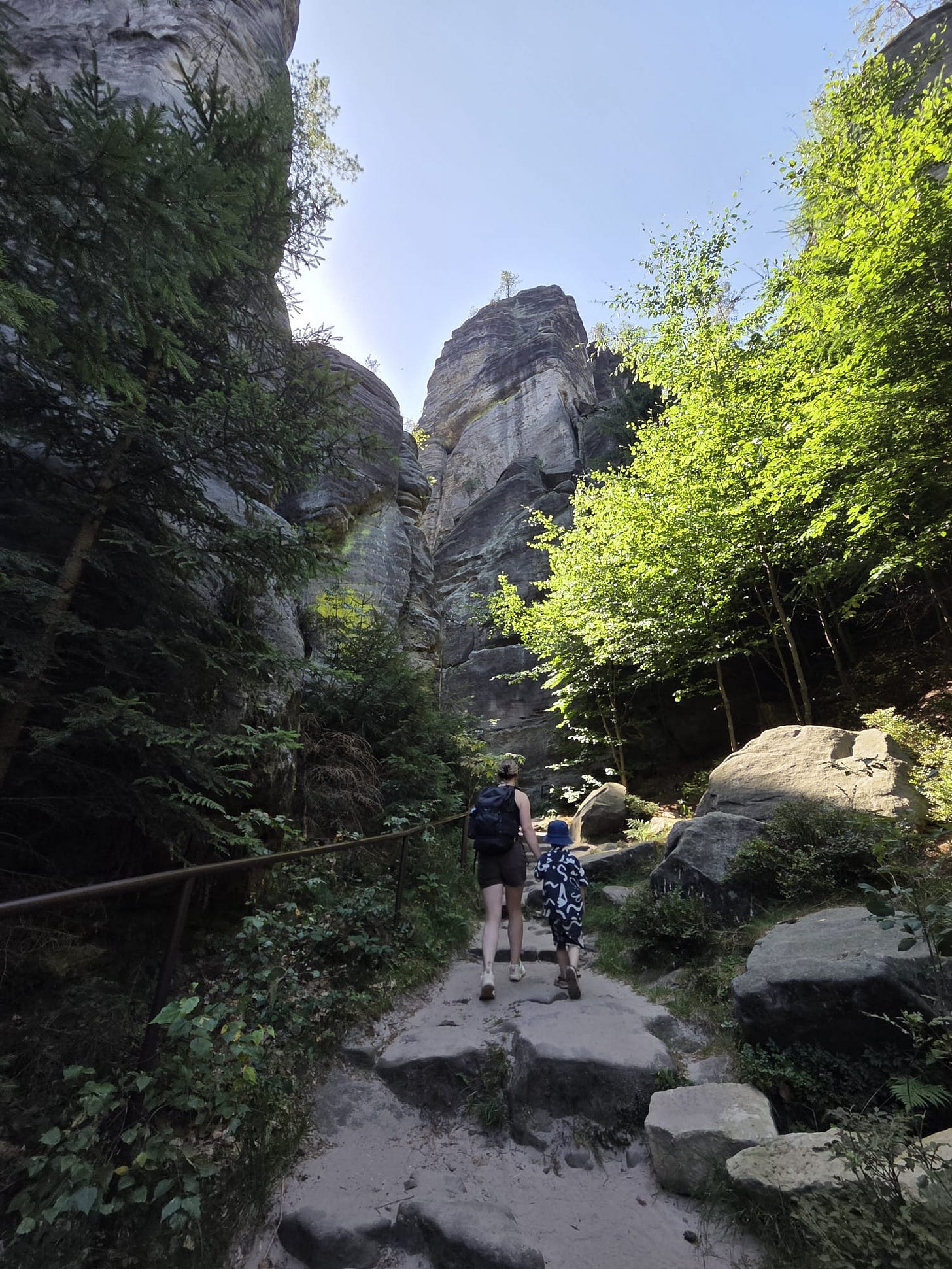
Let’s come clean though, I did use AI a couple of times. We wanted to hike in Český ráj, the ‘Bohemian Paradise’ rock area, with a four-year-old walking and a one-and-a-half-year-old in a backpack carrier. That area is hard to read as a visitor: where is the entrance, what does access cost, which colour trail is suitable for small legs, where can you eat afterwards, and how early do you need to start when the forecast says 37 degrees?
I asked Claude (Haiku, from my phone) and it sorted the whole day: address, ticket, route colour, timing, lunch. The kids made it, the parents too. The rule I ended up with was simple. AI was allowed to make the family day better, and that was it.
What I came home to
One new signup. One new Memnar generated. Nothing broken. Those are quiet numbers, and I am publishing them anyway. That was the deal I made with myself when I started building in public.
The state of the queue surprised me: everything finished, nothing on fire (phew). My process matured more this year than I realised, and I only saw it because I was away for three weeks.
The best thing in my inbox was a reply. In the last edition I asked, here and on LinkedIn, what a Product Hunt rank actually brings you. During my holiday someone answered: launch there much later, when you can convert the traffic. I decided they were right. So the first thing I did on Friday, laptop finally open, was tell my AI system that the Product Hunt launch is postponed. One sentence, and the whole fleet stopped aiming at it.
What I read this week
Reading stayed allowed. I kept scrolling LinkedIn on holiday because I enjoy it, and sent the good finds to my own WhatsApp. Five from that list:
The new rules of context engineering: Anthropic's own rules for what to feed the Claude 5 generation of models. I explain this to clients weekly, and now I can point at the source.
Pomelli: a Google Labs tool that reads your brand DNA and generates on-brand campaign posts from it.
Treg: a skill and secret registry that injects auth server-side: agents never hold raw API keys.
How two settings tripled ARC-AGI-3 scores: OpenAI tripled a benchmark score with two harness settings, no model change.
Memory research digests: raw paper digests on AI memory, shared by a builder who deprecated his own do-everything second brain. I build memory for a living, so I read these twice.
How do you switch off when something of yours stays on? And if you tried this Summer and failed: what pulled you back in? Reply and tell me, I want the campsite stories.