I put a Pentagram-style process into a Claude Code skill, ran it on my own brand, and four ugly rounds later, found the one move that fixed it.
My old logo had a rocket in it, and I did not like it at all. I have a background in graphic design and branding, and worked at a few design agencies before I started this, so I knew exactly what I was looking at: an icon with no depth.
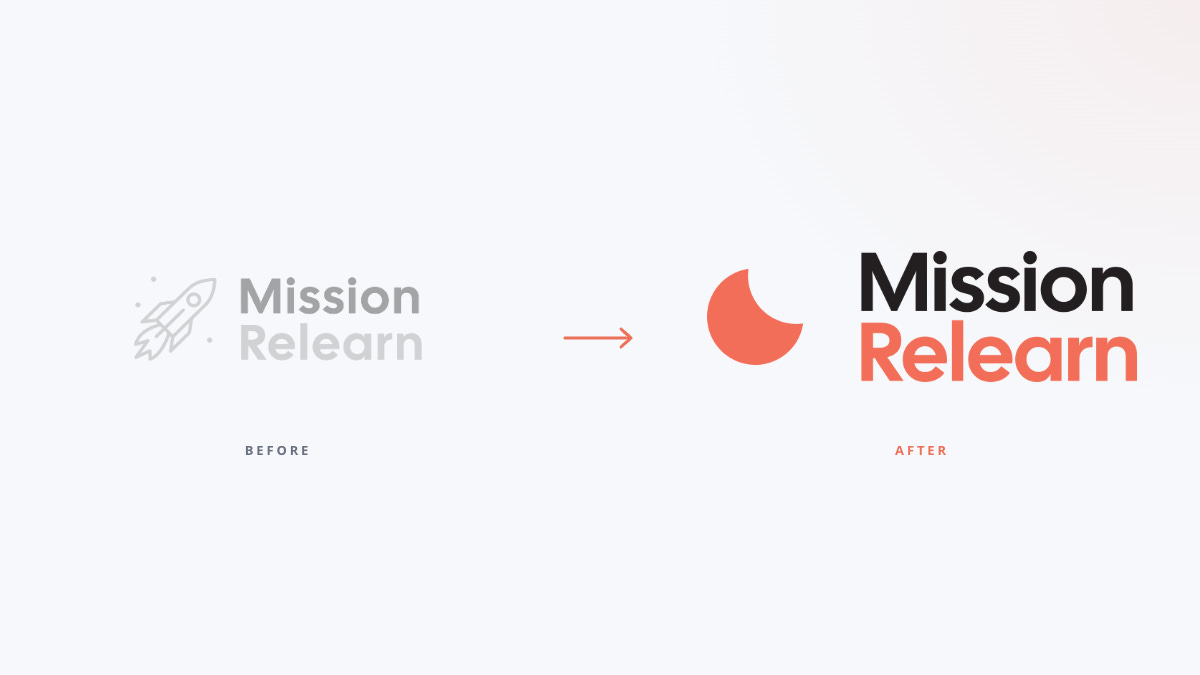
It had to go up a level, and I wanted to see whether I could get there with a process rather than a designer.
To explain to new folks reading this: I run Mission Relearn, a one-woman AI consultancy in the Netherlands, and I build Memnar, a portable memory for your AI. Almost everything I ship, I ship alone with agents.
The move that got me out of four ugly rounds
Logo skills generate simple icons. What they skip is everything a studio does around the feeling a logoset should convey. So, I built that as a Claude Code skill: six phases with a client gate between each one, modelled on how Pentagram, Koto and Wolff Olins run identity work. Strategy before form.
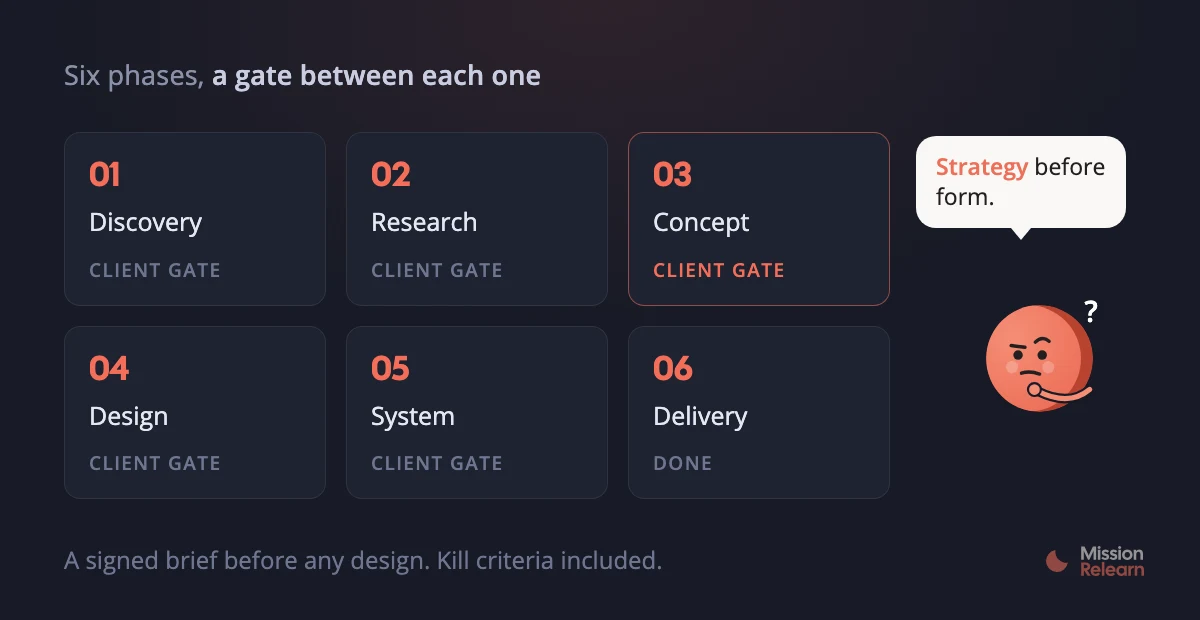
A signed brief before any design. One carrying idea per concept. Kill criteria included, so ‘I don’t like it’ cannot end a round.
Then I ran it on my own brand, and the two halves behaved completely differently.
The strategy half was genuinely good. Four rounds of discovery questions, an equity inventory, a landscape audit across 25 brands, and an ‘onliness statement’ I still stand behind. I was satisfied with all of it.
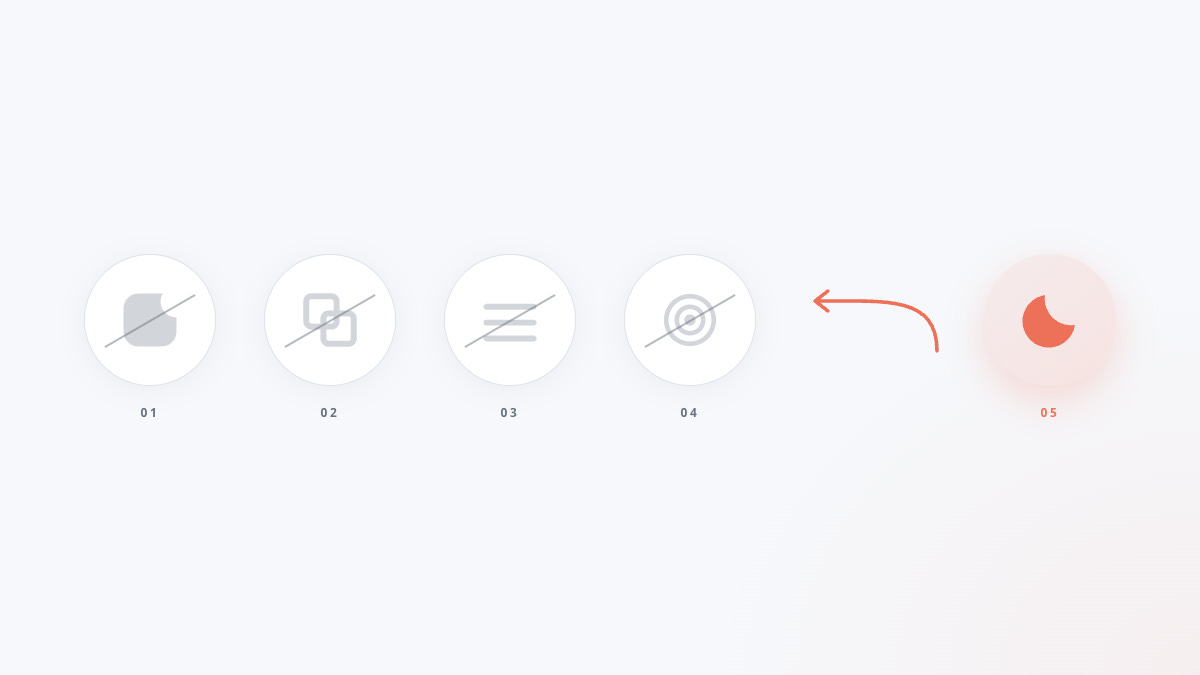
The other half gave me four rounds I rejected. First, a rounded cube with a bite taken out of it, which was so simple that there was no depth to it. So, I asked for research into more complex forms, and got interlocking monograms with shapes carved out of each other. Ugly, with no taste at all.
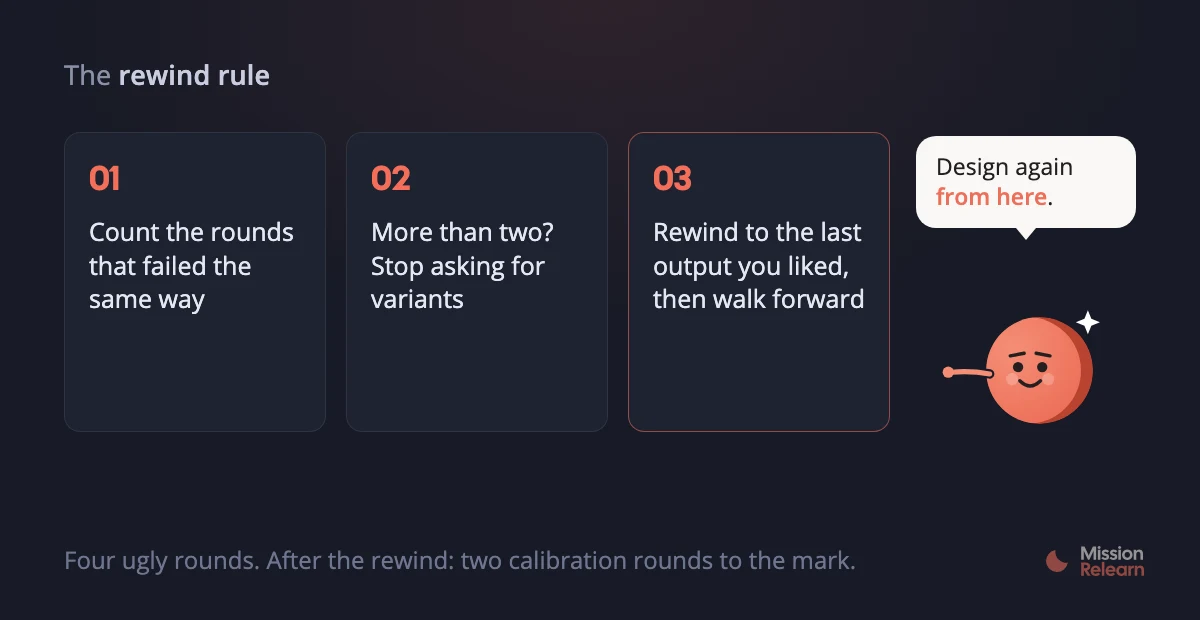
What fixed it was the step to send it all the way back to the concept phase. I said: ‘design again from here, with everything you have just learned about craft’ (I asked it to do deep research into what design craft consists of). More variants on the failed icons would not help at all, and starting from zero would have thrown away the research that was good.
That round produced shapes with a concept direction. Two calibration rounds later, I had the mark.
So, my tip: when AI output keeps missing, count how many rounds you have spent with the same fails as output. If it is more than two, go back to the last output you were happy with, hand over what has been learned since, and let it walk forward again.
That protocol is now in a ready-made skill, and the skill is public: rebrand-skill on GitHub. Clone it into your Claude Code skills folder. My own brand is in there as the worked example, including the rounds that failed.
What I read this week
bb: an open-source, local-first agent workspace that can automate and modify itself, which is the closest thing yet to the software factory idea people keep gesturing at.
savvy: a local-first macOS meeting assistant that gives live guidance grounded in your own sources, so the suggestions trace back to something.
glippy-webmcp: a plugin that audits what your site could expose to agents, writes the tools against real seams in your code, and proves each one works in a browser. If WebMCP is new to you, this explainer is the primer.
Microduck: a 25 cm biped robot with a camera, LiDAR and a grasping beak, open-source stack, 399 dollars. Filed under things I do not need but still want to buy.
Now I want yours: when something you are building with AI misses three times in a row, what do you actually do? Comment; I read all of them.